
How to Search Iosco County Court Records
The broadest public tool is Michigan's statewide case search, run by the state court system. The Michigan Courts case-search page opens the MiCOURT case search, which can show case information, documents, orders, and opinions. What shows up depends on the court type. Civil, traffic, criminal, domestic, and probate cases may all appear. For Iosco County, the same system reaches the 23rd Judicial Circuit Court and the county probate division through direct court routes. County-run payment portals add a second way in for fines, costs, and case lookups.
The state keeps a plain entry page that frames the search before the results load, posted on the Michigan Courts case-search portal.
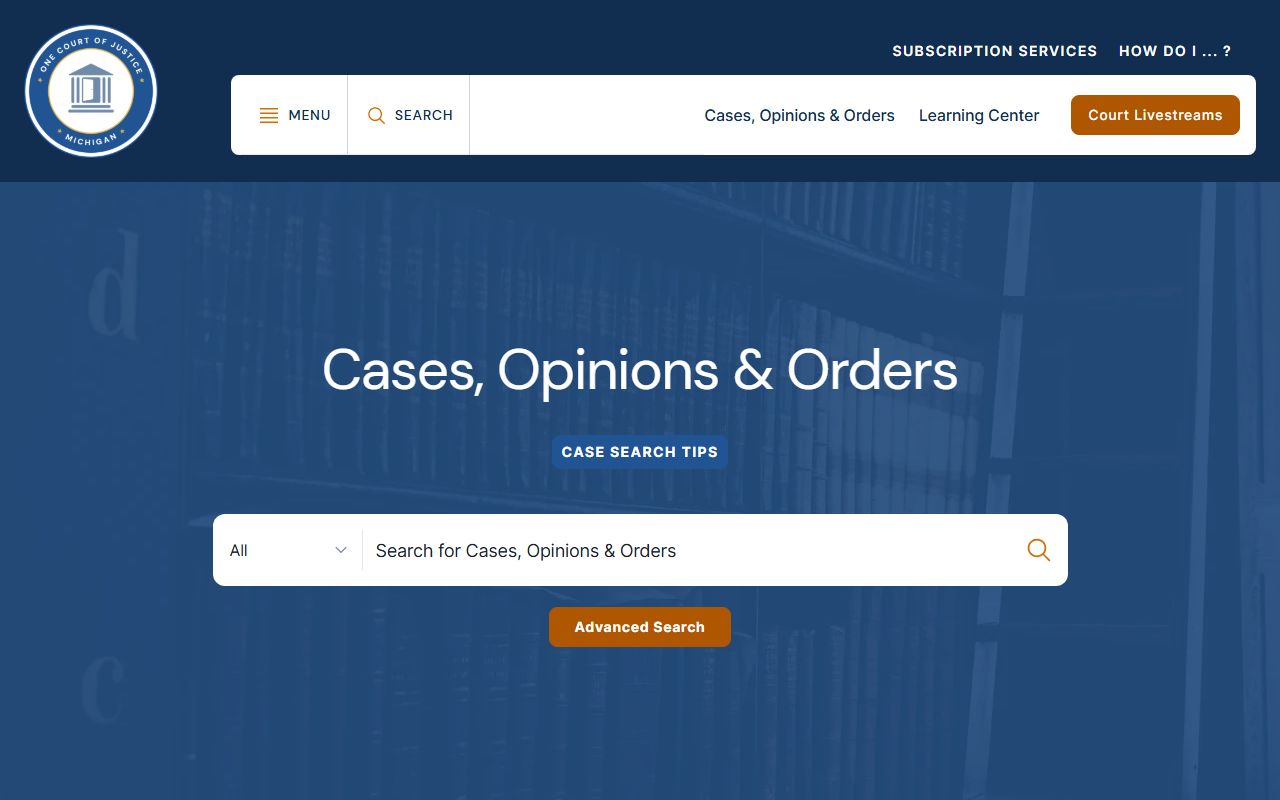
That landing page routes users into the live search and explains which record types each court shares. From there the trail leads straight to Iosco County cases.
A little prep speeds the work. Have a party's full name, a case number, or an attorney's name ready. Case numbers use a year, court-type, and sequence format, so even a partial number can narrow the field. Hearing dates and the courthouse schedule live on the Iosco County court dockets page rather than the case-search box.
- Open the Michigan Courts case-search page and accept the public-access terms.
- Pick a search type: case number, party name, or attorney name.
- Set Iosco County or the specific court to trim the result list.
- Review the matches and open the case that fits.
- If the case is not online, note the court and call the clerk's office.
Iosco County Court Records Search Fields
The MiCOURT public search accepts a small set of fields, and each one targets a different way to find a file. You do not need to fill every box. One strong identifier, such as a case number or a full party name, is usually enough to pull a match. Dropdown fields help when you want to limit results to one court level.
| Field Label | Type | Required | Notes / Format |
|---|---|---|---|
| Case Number | Text | No | Year, court-type, sequence format; a partial number can be shortened. |
| Party Name | Text | No | Last and first name of a plaintiff, defendant, or petitioner. |
| Attorney Name | Text | No | Name of the attorney of record on the case. |
| Bar Number | Text | No | State bar number tied to the attorney. |
| Lower Court | Dropdown | No | Filters by the trial court that first heard the case. |
| Appellate Court | Dropdown | No | Filters appeals at the Michigan Court of Appeals or Supreme Court. |
The MiCOURT case search shows how these fields sit together on one screen.
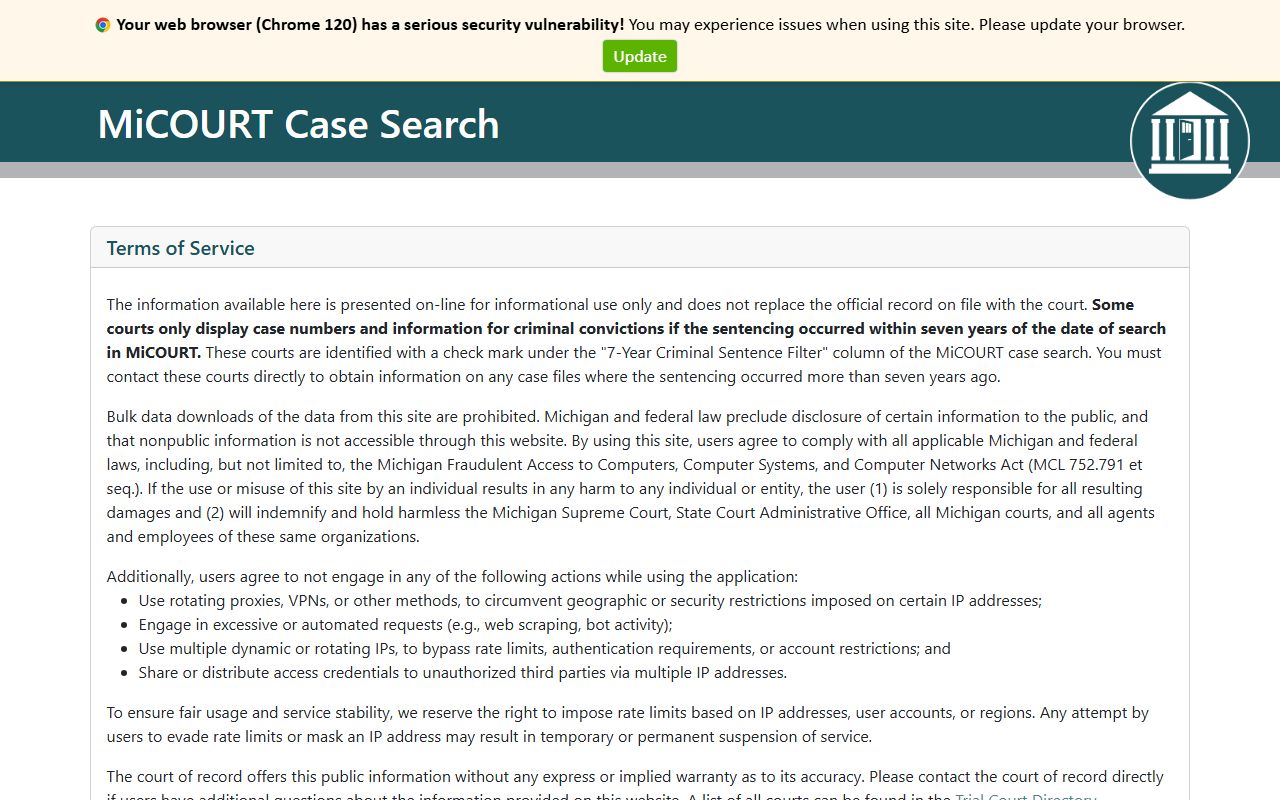
A party-name search casts the widest net, while a case number lands on a single file. The attorney and bar-number fields help when you know the lawyer but not the parties.
Types of Iosco County Court Records
Court records in Iosco County split across three trial courts. The 23rd Judicial Circuit Court handles serious civil claims, felony matters, domestic relations, and appeals from district court. The 81st District Court handles traffic, misdemeanors, landlord-tenant cases, small claims, and civil suits up to the district limit. The Probate and Family Court keeps estate, guardianship, and family-division files.
Each court has its own online route. Circuit files open through the circuit court case-search route, a county-linked path into the statewide system. District matters often surface through the district court payment portal, which lets users search by name and date of birth, citation number, or case number for fines and costs.
The circuit route pulls the 23rd Circuit's public cases into the same viewer as the statewide search. The district portal, by contrast, is built around payment and citation lookups rather than a full case archive.
The main record categories a resident may look for include the following.
- Civil cases such as contract disputes, injury claims, and property matters.
- Criminal cases, from district-court misdemeanors to circuit-court felonies.
- Traffic tickets and civil infractions filed in district court.
- Domestic relations files: divorce, custody, parenting time, and support.
- Probate matters, including estates, guardianships, and conservatorships.
What Iosco County Court Records Show
A court record is more than a name and a charge. It tracks the full life of a case, from the first filing to the final order. The exact fields vary by court and case type, but most public case files share a common core. Probate and family files open through the probate case-search route, the county's path into the same viewer for estate and guardianship matters.
That probate route returns the same style of case summary users see for circuit files. The table below lists the fields a public case record commonly shows.
Reading the record takes a little care. The disposition line states how a case ended, while the sentence or judgment line states the result. A criminal file may show a plea, a verdict, and then a sentence. A civil file may show a settlement or a money judgment instead. The register of actions is the running log, so it often holds the clearest timeline of what happened and when.
| Field | What It Shows |
|---|---|
| Case Number | The court's unique file number in year, court-type, sequence format. |
| Filing Date | The date the case opened with the court clerk. |
| Parties | Plaintiff, defendant, petitioner, or estate named in the file. |
| Charges or Claims | The counts filed, or the civil relief the plaintiff seeks. |
| Attorney of Record | The lawyer and bar number tied to each side. |
| Register of Actions | A dated list of filings, motions, and hearings. |
| Disposition | The outcome: dismissal, plea, verdict, or judgment. |
| Sentence or Judgment | The penalty, award, or order the court entered. |
Public Access Framework for Iosco County Court Records
Michigan treats most court files as public. Court records are kept by the clerk under Michigan Court Rule 8.119, which sets how files are held, indexed, and shared. Access still runs through the court's own rules on redaction, sealed files, and electronic availability. So a record can be public in principle yet still limited in what the online view shows.
For records that a court does not post online, the fallback is the Michigan Freedom of Information Act, MCL 15.231. That law lets a person ask the office that holds a record for a copy. The county clerk, sheriff, and prosecutor each publish their own request forms and fee rules. A request names the record, sets a delivery method, and follows a five-business-day response clock.
Fees follow the county's published schedule. A requester can agree to extend the response deadline, and the clerk form captures that consent. The first twenty dollars of fees can be waived for a qualifying indigent or nonprofit requester. If a request is denied or the fee estimate seems too high, the county publishes separate appeal forms for both problems. That structure keeps public access procedural rather than automatic.
The state also lists every trial court and its contact details on the Michigan trial court directory.
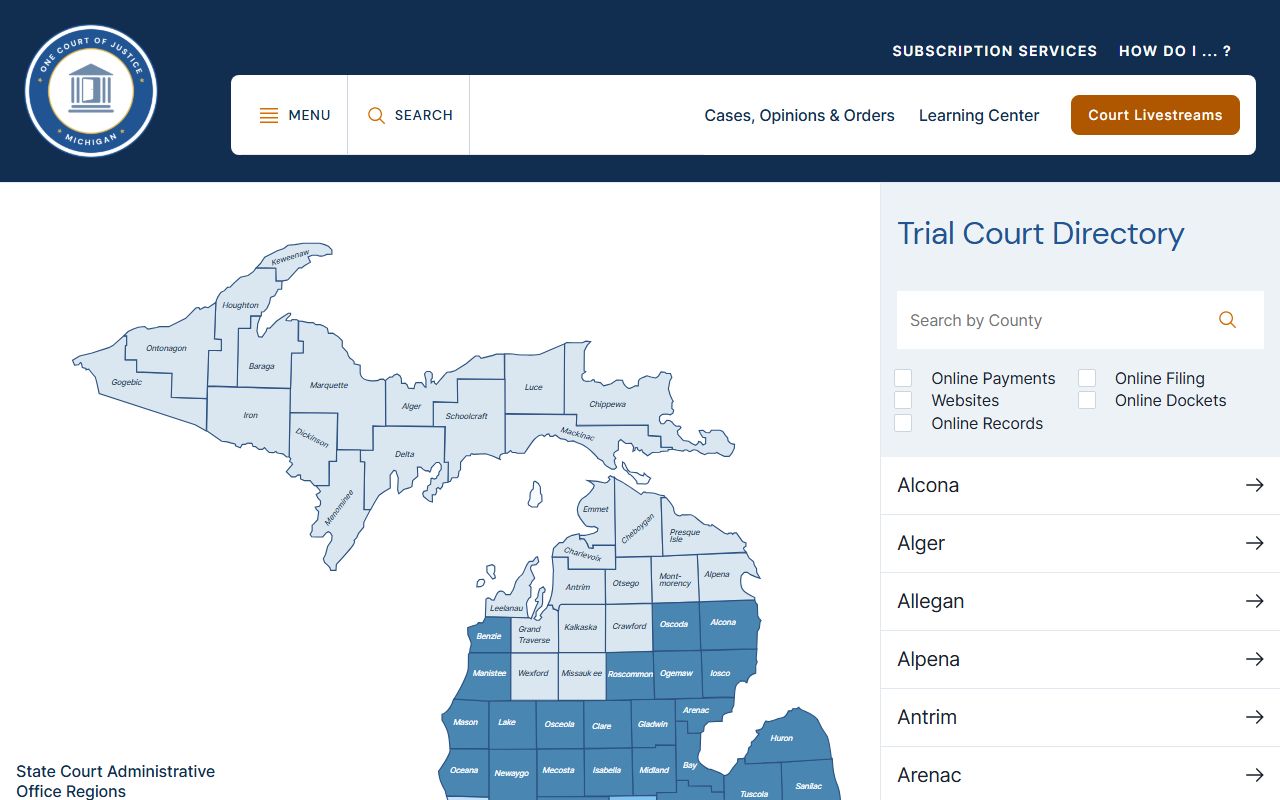
That directory confirms the courts that hold Iosco County files and points to the phone lines for records that are not online.
Note: A public case still carries redaction rules, so some personal details are removed from the online view even when the case itself is open.
Records That Are Sealed or Confidential in Iosco County
Not every file is open. Michigan law shields juvenile records closely, and MCL 712A.28 limits who may see delinquency and other juvenile court files. Sealed cases, adoption files, and many mental-health and neglect matters also stay off the public view. The Probate and Family Court routes those sensitive cases through court forms and staff rather than a broad public archive.
Online payment tools show the same limit in practice. The circuit court payment search lets users look up a case by number or by name and date of birth, but it states that non-public cases cannot be paid online.
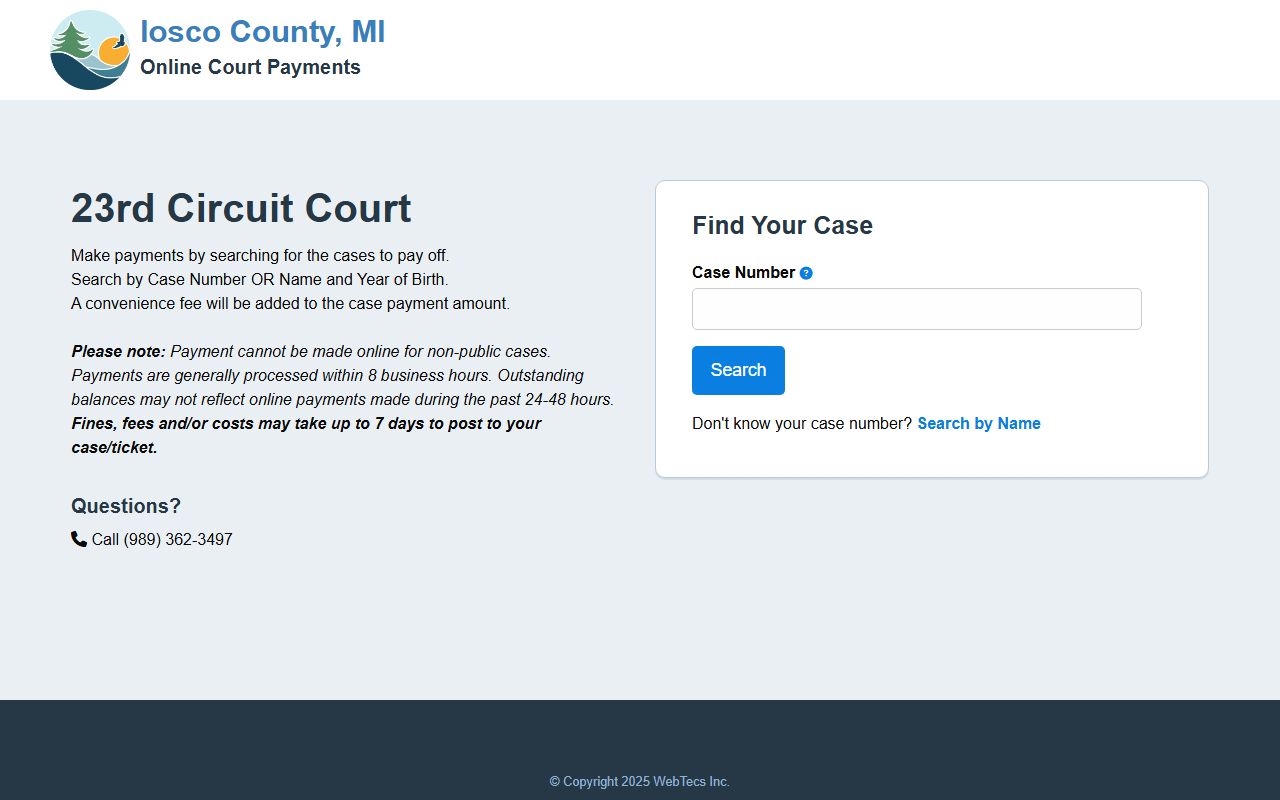
When a case does not appear online, that is often by design, not a search error. To view a sealed or non-public file, a person usually must be a party, an attorney of record, or must ask the court by motion. The clerk can explain which route fits and whether a FOIA request or a court order is the right next step.
Records can also drop off the public view after a set-aside. Michigan lets some past cases be expunged, and the state now clears certain records on an automatic schedule. Once a case is set aside, it no longer shows in a routine public search. That is a different outcome from a sealed file, but it has the same effect for a member of the public running a name search.
Note: No online search error means a record does not exist; a missing case may simply be non-public, juvenile, sealed, or set aside under state law.
In-Person Court Record Requests
Some records are easiest to pull at the counter. The Iosco County Clerk's Office sits in the courthouse complex in Tawas City and also serves as clerk of the circuit court, so it handles both county and circuit filings. Staff can point a visitor to the right court and explain copy fees and certified-copy rules. The office closes for lunch each weekday, so timing a visit around that hour helps. Deeper questions about clerk services and certified copies are covered on the Iosco County Clerk of Court page.
Iosco County Clerk's Office
422 W. Lake St.
Tawas City, MI 48763
(989) 362-3497
Mon-Fri 8:30am-4:30pm (closed 12:30-1:30pm for lunch)