
How to Search Iosco County Traffic Court Records
Traffic cases in Iosco County are handled by the 81st District Court, and the most practical public window into them is the district payment portal. The county routes ticket lookups and payments through GovPayNow, where you can search by case number or by defendant name and date of birth. The portal covers court-ordered fines and costs. It does not list every case, because non-public matters are excluded by design.
Have a few details ready before you start. The citation number from the ticket is the fastest key. If you do not have it, the driver's full name and date of birth will usually pull the record. For a broader check across Michigan courts, the statewide MiCOURT case search can also surface traffic case information.
- Open the district payment portal and choose the traffic or district-court search.
- Enter the citation number, or type the defendant first, middle, and last name with a date of birth.
- Confirm the matching case and open its detail view.
- Review the charge, court date, disposition, and the balance of fines and costs.
- Pay online, note the hearing date to contest it, or contact the district clerk for a certified copy.
Which Courts Handle Traffic Cases in Iosco County
Iosco County does not spread traffic work across separate municipal or justice courts. Almost every ticket lands in one place, the 81st District Court at the courthouse on West Lake Street in Tawas City. Judge Christopher P. Martin presides over the district bench, and Teri Hill serves as the court's traffic clerk. Magistrate and Court Administrator Brian Harger also hears many civil infraction and informal traffic matters.
The district court's reach is set by statute. Under MCL 600.8301 it holds exclusive civil jurisdiction over claims up to $25,000, and MCL 600.8311 gives it misdemeanor and other criminal jurisdiction. Speeding, seat-belt violations, and most civil infractions stay at this level. A traffic case only moves up to the 23rd Judicial Circuit Court when a felony charge or an appeal is involved.
| Court | Traffic Cases Handled | Address |
|---|---|---|
| 81st District Court | Speeding, seat-belt and civil infractions, misdemeanor traffic, informal hearings | 422 W. Lake St., Tawas City, MI 48763 |
| 23rd Judicial Circuit Court | Felony traffic charges and appeals from district court | 422 W. Lake St., Tawas City, MI 48763 |
| Probate & Family Court | Juvenile traffic matters involving minors | 422 W. Lake St., Tawas City, MI 48763 |
Note: All three courts share the same courthouse block in Tawas City, so an in-person visit for a traffic file starts at one address regardless of the case level.
Types of Iosco County Traffic Cases on Record
Michigan sorts most minor driving offenses as civil infractions rather than crimes. A civil infraction is a ticket you pay or contest, not a charge that can land you in jail. More serious conduct becomes a misdemeanor or, in rare cases, a felony. The district court's added civil authority under MCL 600.8302 is what lets it handle the bulk of these infraction matters locally.
The statute page for that added civil jurisdiction is published by the state legislature. You can read the Michigan district court civil jurisdiction text to see how civil infractions fit alongside small claims and landlord-tenant matters.
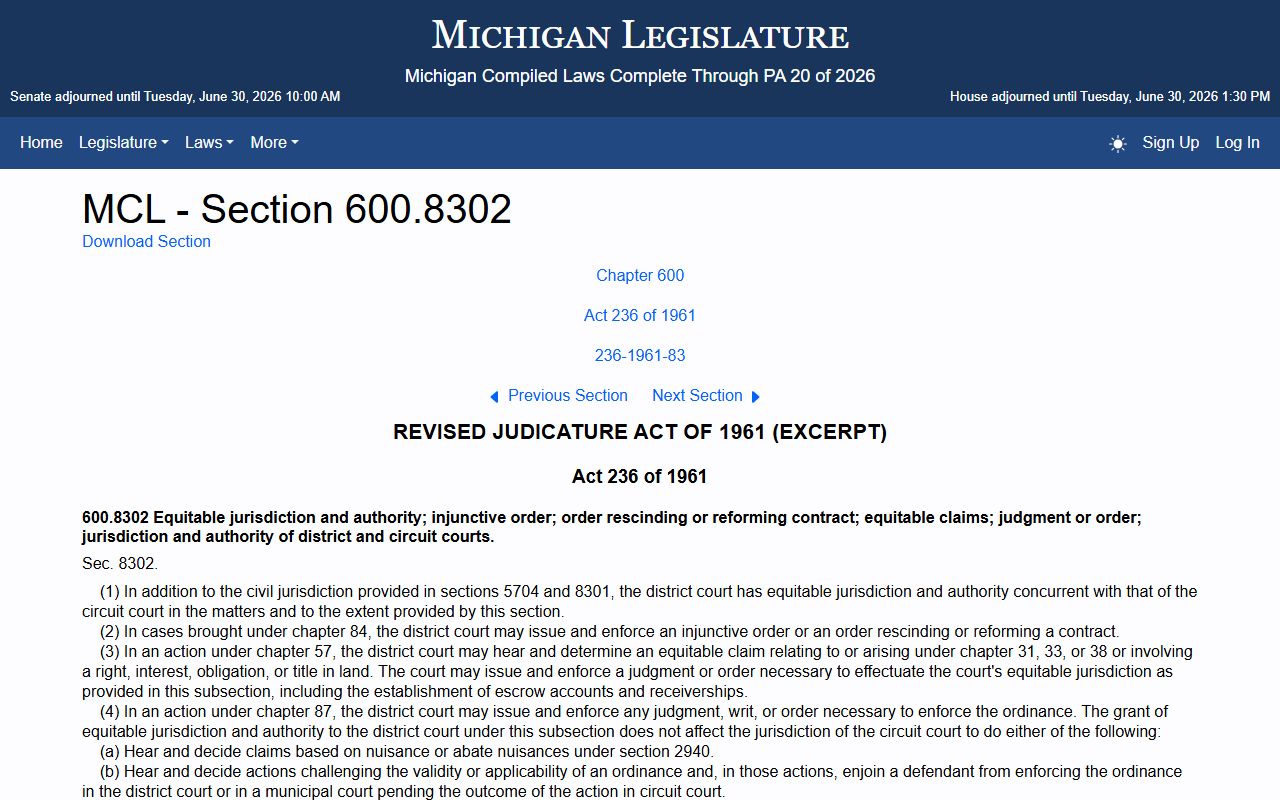
That civil-versus-criminal split decides how a case appears in the record and how it is resolved. The common categories look like this.
- Moving civil infractions - speeding, failure to yield, and improper lane use that carry a fine and state points.
- Non-moving and equipment infractions - defective lights, expired plates, and similar fixable violations.
- Seat-belt and safety violations - named directly in the district court's core traffic jurisdiction.
- Misdemeanor traffic - driving on a suspended license or reckless driving, which can add jail exposure.
- Commercial vehicle offenses - tickets tied to a commercial driver license that trigger federal reporting.
What Iosco County Traffic Court Records Show
A traffic case file tracks the ticket from the moment it is filed to the moment it closes. When you open a record through the district portal, you see the identifiers, the charge, the schedule, and the money owed. The file does not usually include the officer's dashboard footage or full narrative, but it does confirm what the driver was cited for and how the court ruled.
| Field | What It Shows |
|---|---|
| Citation Number | The unique number printed on the ticket that keys the whole case. |
| Violation | The cited offense and the statute or ordinance behind it. |
| Court Date | Any scheduled hearing, informal review, or appearance deadline. |
| Fine and Costs | The amount assessed and the running balance still owed. |
| Disposition | How it ended: paid, responsible, dismissed, or set for trial. |
| Points Note | A pointer that conviction data is reported to the state driving record, not stored here. |
Points are the field drivers most often misread. The court file records the outcome, but the point total lives on your Michigan driving record, which the Secretary of State keeps as a separate document.
Searching by Citation Number vs by Name
Both search methods reach the same records, but they behave differently. A citation number is exact and points to one case, which makes it the cleanest way to find a single ticket. A name search is broader and can return more than one match, especially for common last names, so the date of birth field narrows it down. If a case is non-public, neither method will show it online, and the portal will simply return nothing.
The district portal exposes these search fields.
| Search Field | Type | Required | Notes / Format |
|---|---|---|---|
| Defendant First Name | Text | With name search | Use the legal name printed on the ticket. |
| Defendant Middle Name | Text | No | Helps separate common-name matches. |
| Defendant Last Name | Text | With name search | Spelling must match the court record. |
| Date of Birth | Date | With name search | Filters a name down to one driver. |
| Citation Number | Text | Alternative | The number from the paper ticket; finds one case. |
| Case Number | Text | Alternative | The court-assigned number once the case is filed. |
Note: The district portal handles fines and costs only, so a search that returns no result may mean the case is non-public rather than missing.
Paying or Contesting an Iosco County Traffic Ticket
A civil infraction ticket gives you a deadline to respond. You can admit responsibility and pay, admit with an explanation, or deny and ask for a hearing. Paying online through the district GovPayNow portal settles fines and costs without a courthouse trip. Contesting means telling the court you want a hearing before that deadline passes, so the case does not default against you.
Iosco County offers two kinds of hearings for infractions. An informal hearing is heard by the magistrate without lawyers, where you and the officer present the facts. A formal hearing is held before the judge and can involve attorneys. For misdemeanor traffic charges, an arraignment and a plea are required, and jail exposure makes counsel worth considering.
- Read the ticket and note the response deadline printed on it.
- Decide whether to pay, admit with explanation, or deny and request a hearing.
- To pay, use the district GovPayNow portal or contact the traffic clerk.
- To contest, notify the 81st District Court before the deadline to set a hearing.
- Attend the informal or formal hearing and bring any evidence or witnesses.
Public Access Laws for Traffic Court Records
Michigan treats court records as public in principle, subject to the court rules that govern what a clerk may release. Court Rule MCR 8.119 sets how the district clerk maintains and shares case files, and redaction and sealed-record limits apply. Traffic infractions are generally open, while juvenile and certain protected matters are restricted.
Key Statutes:
MCL 600.8301 - grants the district court exclusive civil jurisdiction over claims up to $25,000, the tier that covers most traffic infractions.
MCL 600.8311 - gives the district court its misdemeanor and criminal jurisdiction, including misdemeanor traffic charges.
When a record is not visible online, the fallback is direct. Call the district court or the county clerk, or file a request under the Michigan Freedom of Information Act with the office that holds the file.
Iosco County Court Traffic Records vs State Driver Records
This is the distinction that trips up most drivers. The Iosco County court traffic record is the case file, and it lives with the 81st District Court. The Michigan driving record is the master history the Secretary of State keeps for every licensed driver. They are two different files, built for two different purposes, and a correction to one does not automatically fix the other.
| Detail | Court Traffic Record | State Driving Record |
|---|---|---|
| Record source | 81st District Court, Iosco County | Michigan Secretary of State |
| What it contains | Citation, charge, hearing dates, disposition, fines and costs | Convictions, points, license status and history |
| Where to access | District GovPayNow portal or the district clerk | Secretary of State driving-record request |
| How to correct errors | Contact the district court clerk about the case file | Contact the Secretary of State about the driving record |
A dismissed ticket should show as dismissed in the court file and should not add points to the state record. If the two disagree, start with the court that entered the disposition, because the state record follows what the court reports.
CDL and Commercial Driver Records
Commercial driver license holders face stricter rules than other drivers. Federal law bars the masking of most commercial convictions, so a ticket that a private driver might resolve quietly still gets reported to the state and onto the commercial record. That reporting can affect a livelihood, not just an insurance rate.
Because of that exposure, CDL holders should treat even a minor Iosco County traffic ticket seriously. Many deferral or dismissal options that exist for standard drivers are limited or unavailable for commercial violations. The 81st District Court still handles the case, but the outcome carries further, so confirming the exact disposition in the court file matters more than usual.
DUI and DWI Cases in Iosco County
Impaired-driving charges are not ordinary traffic tickets. In Michigan an operating-while-intoxicated case is a criminal matter, so it follows the misdemeanor or felony track rather than the civil infraction path. The 81st District Court handles the arraignment and misdemeanor stage, and felony impaired-driving matters move to the circuit court.
For the full charge, plea, and sentencing detail on an impaired-driving case, use the Iosco County criminal court records, which cover the case file the district and circuit courts build.
Deferred Adjudication and Defensive Driving
Some Iosco County drivers ask the court to hold a ticket open or reduce it so points never reach the state record. Options vary by offense and by the driver's history, and the magistrate or judge decides case by case at an informal hearing. There is no automatic defensive-driving credit for every ticket, so the request has to be made to the court, not assumed.
Juvenile traffic offenses take a different route. When a minor is involved, the matter can run through the Probate and Family Court, which uses a separate payment portal. The county routes juvenile and probate payments through GovPayNow rather than the district traffic portal.
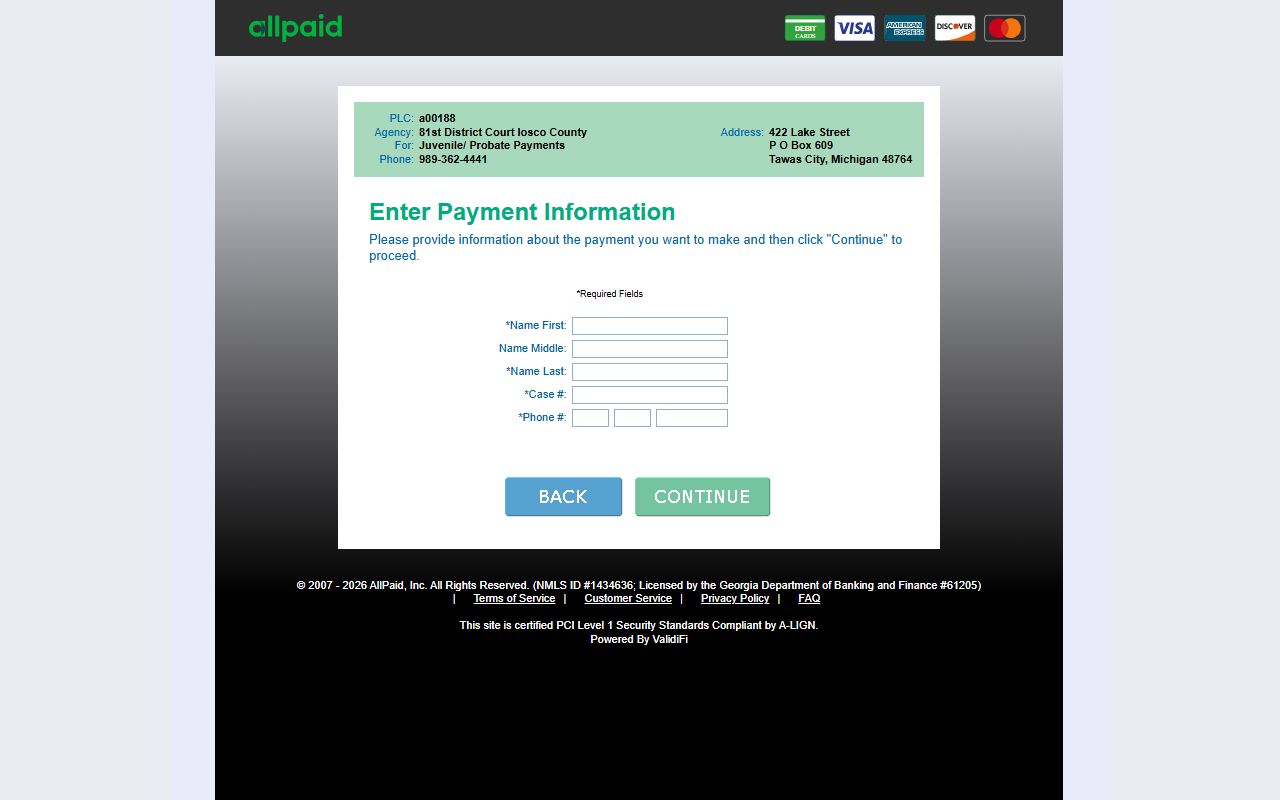
That probate payment page confirms the separate name, case number, and phone fields used for juvenile and family-division matters, which is why a minor's traffic case may not appear in the standard district search.
Sealing or Expunging Iosco County Traffic Records
Michigan expanded record set-aside relief in recent years, and the district court page points drivers toward automatic-expungement resources. Civil infractions are handled differently from criminal convictions, and many minor traffic infractions are not eligible for expungement in the same way a misdemeanor is. A misdemeanor traffic conviction may qualify for a set-aside under state law once waiting periods and eligibility rules are met.
The image charge on driving-related crimes and the set-aside path both start from the same statutory framework the state publishes. You can view the district court criminal jurisdiction statute to see where misdemeanor traffic sits before any relief applies.
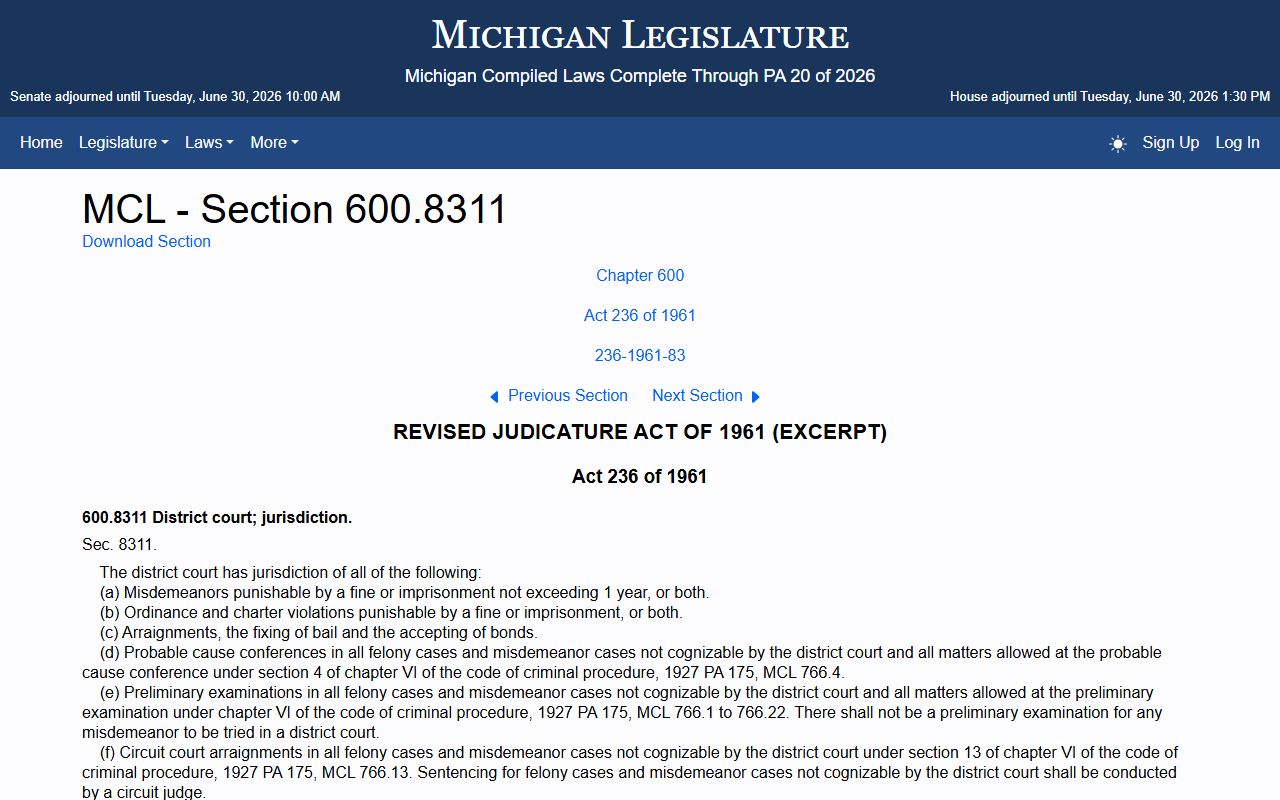
Because eligibility is technical, confirm the exact conviction and offense date in the court file first, then check the current set-aside rules before filing anything.
Fees for Iosco County Traffic Record Copies
Traffic costs come in two forms, and drivers often mix them up. The first is the fine and court cost tied to the ticket itself, which the court sets by order and which you pay through the district portal. The second is the fee for a copy of the case record, which the clerk charges separately. The county's published court sources do not fix a single flat copy price for traffic files, so the amounts below describe how each charge is set rather than inventing a number.
| Item | Amount |
|---|---|
| Civil infraction fine and costs | Set by the court on each case |
| Certified copy of a traffic record | Charged by the district clerk on request |
| Plain copy of a case document | Charged by the district clerk per document |
| Michigan driving record | Ordered and priced by the Secretary of State |
For the exact copy charge or to confirm a certified-copy request, contact the district court staff or the Iosco County Clerk, since fees are quoted at the counter and can change.