
Active Warrants in Iosco County
An active warrant is a court order that lets law enforcement arrest a named person or, in some cases, search a place. In Iosco County, warrants are signed by a judge or magistrate of the 81st District Court or the 23rd Judicial Circuit Court. The Iosco County Sheriff's Office then serves and enforces them. Sheriff Scott D. Frank leads that office, and it stays open around the clock. Warrant and public-safety questions can be raised there at any hour of any day.
No public roster of active warrants sits on the county website. That is normal for Iosco County, not a gap to work around. Warrant status is confirmed by reaching the office that holds the record, not by loading a search grid. The sheriff's office is the first stop for a direct answer. When a warrant ties to an open case, some of the detail may also surface through the county criminal court records search rather than as a stand-alone list.
Types of Warrants in Iosco County
Warrants come in a few forms, and the type shapes how each one is handled. Most people asking about Iosco County warrants have an arrest warrant or a bench warrant in mind. Search warrants and capias orders show up less often, yet they follow the same court-order rules. A judge signs each one before it takes effect.
- Arrest warrant - Issued when a judge finds probable cause that a person committed a crime, allowing officers to take that person into custody.
- Bench warrant - Ordered by the court itself, usually after a missed hearing or an unpaid court obligation.
- Search warrant - Authorizes officers to search a named place or item for evidence, and does not aim to arrest a person.
- Capias or failure-to-appear - A hold-and-bring order that directs officers to bring a person before the court, often after a skipped date.
How to Check for a Warrant in Iosco County
Checking for a warrant here means working the official channels in order. Start with the sheriff, move to the jail line for custody and bond, then check the court record, and file a public-records request if the answer is still not online. Each step covers a different slice of the picture, and skipping ahead often wastes time.
- Contact the Iosco County Sheriff's Office. The office handles warrants and stays open 24 hours a day, so a question can be raised at any time.
- Call the jail at (989) 362-6164 to confirm whether a person is lodged in custody and what bond or fines are needed for release. That line shares only those two facts.
- Search the court record through the MiCOURT case search. Misdemeanor and traffic matters surface in the 81st District Court, while felony bind-overs move to the 23rd Circuit Court, so warrant detail may appear as a related case or docket item.
- File a FOIA request with the sheriff or the county clerk when a warrant confirmation or return is not posted online. A public-records request reaches material that no portal shows.
Custody status and bond figures are covered more fully on the Iosco County inmate records page, which walks through the same jail line and the limits on what staff can share.
Iosco County Warrant Search Fields
Because no county warrant portal exists, a search really means giving an office enough detail to find the right record. Whether you call the sheriff or search a court case, the same identifiers do the work. The table below lists the fields worth having ready before you ask about a warrant, along with why each one helps.
| Field Label | Type | Required | Notes |
|---|---|---|---|
| Full Legal Name | Text | Yes | Last name at minimum; the full legal name narrows common-name matches. |
| Date of Birth | Date | Recommended | Separates people who share a name and confirms identity for staff. |
| Case or Citation Number | Text | If known | Speeds a court-record lookup; district cases use a year, court-type, and sequence format. |
| County | Text | Yes | Confirms the request is an Iosco County matter and not a neighboring county. |
| Court Level | Choice | No | District for misdemeanor and traffic; circuit for felony bind-overs. |
What an Iosco County Warrant Record Shows
A warrant record carries a set of standard fields once an office pulls it. Some of these details are shared freely, while others stay limited or sealed. The inventory below reflects the kind of information attached to a warrant or its related court case, so you know what to expect from a confirmation call or a records request.
| Field | What It Shows |
|---|---|
| Warrant Type | Whether the order is an arrest, bench, search, or capias warrant. |
| Issuing Court | The 81st District Court or the 23rd Judicial Circuit Court that signed the order. |
| Case Number | The court case the warrant is tied to, used for lookups and payments. |
| Charge | The offense that prompted the warrant, such as a misdemeanor, felony, or missed appearance. |
| Bond Amount | The dollar figure needed for release, when a bond has been set. |
| Issue Date | The date the judge or magistrate signed the warrant. |
| Status | Whether the warrant is active, served, recalled, or cleared. |
Note: The jail can confirm only whether a person is lodged and the bond or fines for release, so the full field set may require the court or a records request.
What to Do If You Have a Warrant
An outstanding warrant does not fade on its own, and waiting rarely helps. The steadier path is to deal with it before an officer acts on it. A private attorney or a court-appointed lawyer can confirm the warrant, explain the charge, and often arrange a surrender on better terms. Bond can be posted at the jail around the clock, which can shorten any time spent in custody.
Once a case closes, Michigan law lets many people clear the record tied to an old matter. The set-aside statute at MCL 780.621 spells out who may apply to set aside a conviction and when.
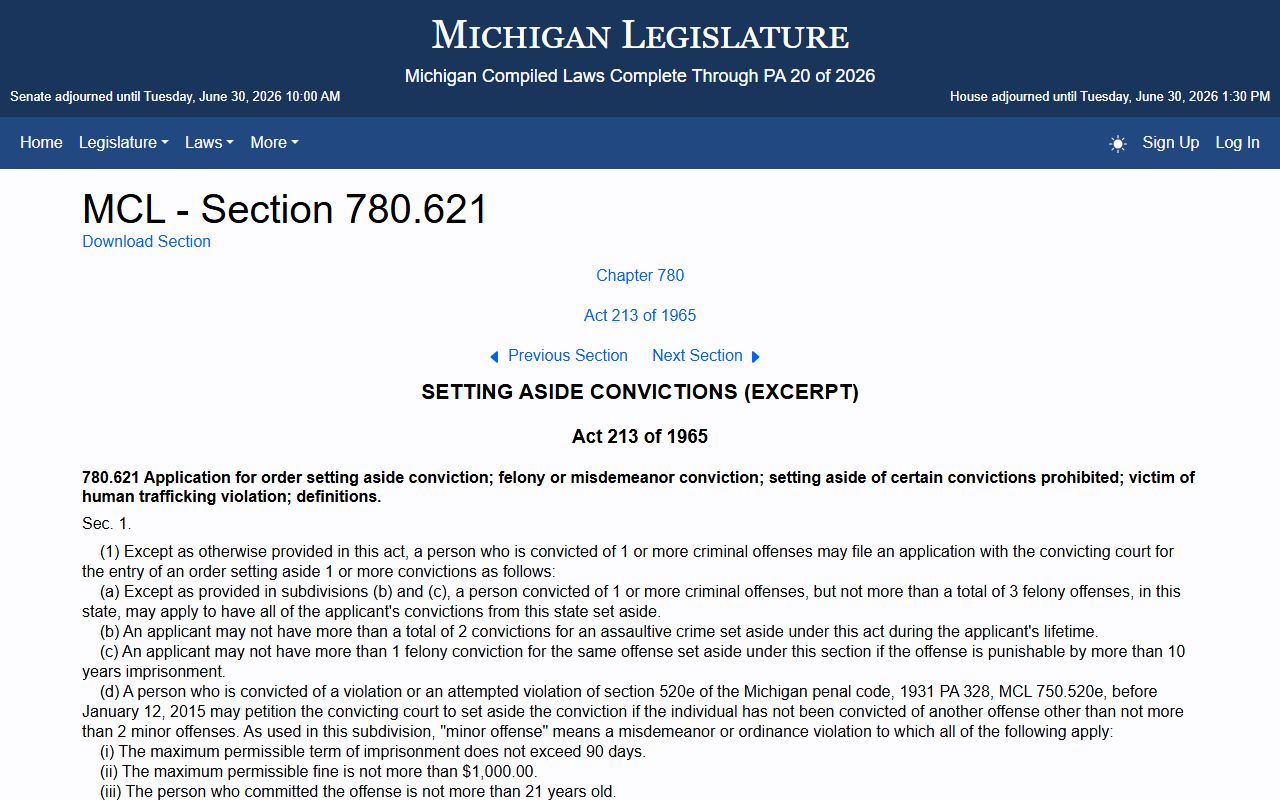
That relief arrives only after a case ends, so it will not lift an active warrant, but it matters once the underlying charge is resolved. Handling the warrant first keeps that later option open.
- Confirm the warrant through the sheriff's office or the court case search before doing anything else.
- Talk to a lawyer who can explain the charge and the likely bond.
- Arrange to appear or surrender on your own terms rather than being picked up.
- Post bond if one is set, keeping in mind that a booking fee applies by law.
Important: Speak with a lawyer before you surrender on a warrant, since the charge, the bond, and your rights all shape the safest way to resolve it.
Requesting Iosco County Warrant Records
No public roster does not mean no public record. When a warrant confirmation, a warrant return, or a related report is not posted online, Michigan's Freedom of Information Act opens a formal path to it. Requests go to the office that holds the record, most often the sheriff for warrant and incident material, or the county clerk for court-linked filings.
The clerk works on a five-business-day response clock under MCL 15.235 and may extend it in writing. Fees can apply, though the first $20 of cost may be waived for a qualifying indigent or nonprofit request. Warrant requests should name the person, any case number, and the record type as clearly as possible.
Iosco County Clerk (Nancy J. Huebel)
422 W. Lake St.
Tawas City, MI 48763
(989) 362-3497
Mon-Fri 8:30am-4:30pm
If a request is denied, the decision can be challenged. The county publishes a clerk FOIA denial appeal form for that exact purpose.
That form gives a resident a written way to push back on a denial or an excess-fee estimate, which keeps the records process honest rather than final.
Restricted Iosco County Warrant Records
Public access to warrants has real limits, and those limits protect people and cases. Some warrants never reach public view because a judge sealed them or because the person is a minor. Others fall outside the county entirely. Knowing which category a warrant sits in explains why a search may return nothing at all.
Michigan's clean-slate procedure at MCL 780.621c allows certain convictions to be set aside automatically, which removes the public trail a resolved case once left behind.
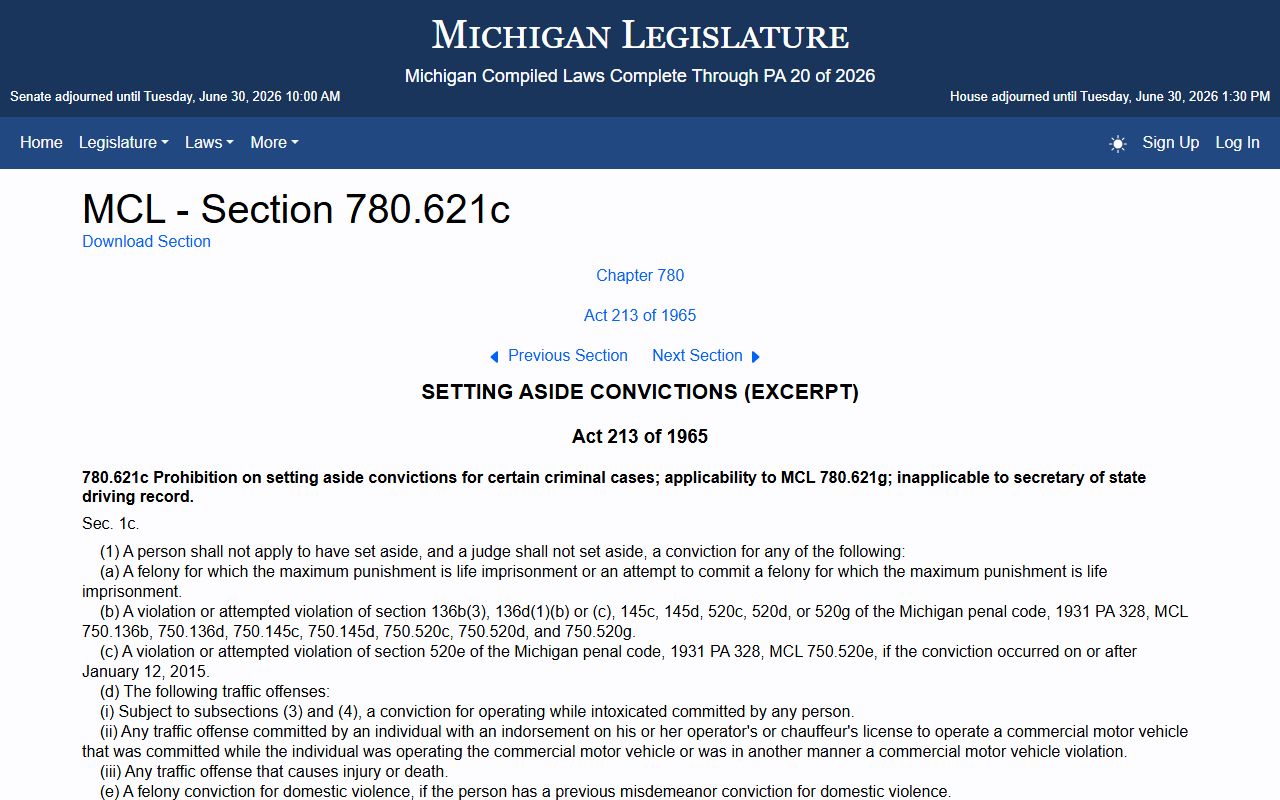
Once that process runs, the matter drops off the public record, so an old case tied to a cleared warrant may no longer appear in a search. The categories below stay restricted no matter how a person searches.
- Juvenile warrants - Records involving minors are shielded under MCL 712A.28 and the juvenile court rules.
- Sealed or set-aside matters - A judge's seal or a set-aside order removes a case from public search.
- Federal warrants - Warrants issued by a federal court are not held or served through the county sheriff.
Note: A blank search result does not always mean no warrant exists, since juvenile, sealed, and non-public matters are removed from public view by law.