
Iosco County Inmate Records Overview
The Iosco County Jail is run by the Sheriff's Office under Sheriff Scott D. Frank. It is a single 63-bed facility that has served the county for more than 50 years, staffed by four corporals and nine correction officers. Jail administrator Brian Golden oversees daily operations. The office is open 24 hours a day, seven days a week. There is no public web roster, so day-to-day custody status is not something you look up on a screen.
Because no online roster exists, inmate records follow a clear fallback chain. First, call the jail. Staff may confirm only two things by phone: whether a person is lodged there, and the bond or fines needed for release. Second, use county and statewide court case search for anything tied to a court case, such as charges and hearing dates. Third, file a Michigan Freedom of Information Act request for booking or intake paperwork that is not posted anywhere.
Keep the limits in mind. This lookup covers people held in the county jail, not the wider system. Someone sentenced to a Michigan Department of Corrections prison, held in federal custody, or booked in another county will not surface through the Iosco jail line. For those, the holding agency is the right place to ask.
How to Confirm Custody and Post Bond
The active lookup in this county happens by phone, not through a portal. A short call to the jail answers the two questions most families have: is the person here, and how much does release cost. Bond can be posted at any hour, so the same call often starts the release process.
- Call the Iosco County Jail at (989) 362-6164 and ask if the person is lodged there.
- Give the inmate's full legal name and date of birth so staff can match the record.
- Ask for the bond amount or the fines needed for release, and how the bond may be paid.
- Post bond by cash in exact amount, by an approved surety bonding agent, or by card through JailATM at the lobby kiosk or online.
- If the matter is tied to a court case, check the county or statewide case search for charges and the next hearing date.
Bring exact cash if you plan to pay that way. Staff cannot make change, and a booking fee applies on top of any bond. For records the jail does not release over the phone, the county's court search and its arrest and charge records path fill in the case side of the story.
Information to Give the Iosco County Jail
Since there is no search box to fill in, the "fields" that matter are the details you give a corrections officer on the phone. Common names slow a match, so the more identifying data you supply, the faster staff can confirm custody. The table below lists what to have ready before you call.
| Field | Type | Required | Notes |
|---|---|---|---|
| Full Name | Text | Yes | Legal first and last name as it would appear at booking. |
| Date of Birth | Date | Helpful | Confirms identity when two people share a name. |
| Booking Date | Date | Optional | Narrows the record if you know roughly when the arrest happened. |
| Case or Citation Number | Text | Optional | Useful for the court side; not needed for a custody check. |
What Iosco County Inmate Records Show
What a family or friend can learn depends on the channel. By phone, the jail confirms custody and the money needed for release, and nothing more. When the arrest becomes a court case, the public case search opens up far more detail. The table below maps the fields a case-linked inmate record can show and where each one comes from.
| Field | What It Shows |
|---|---|
| Name | The legal name used at booking, confirmed by the jail or listed on the court case. |
| Booking Date | The date the person was lodged in the jail, if staff release it. |
| Charges | The offenses filed, visible through the district or circuit court case record. |
| Bond Amount | The cash or surety needed for release, confirmed by the jail or set on the case. |
| Court | Whether the matter sits in the 81st District Court or the 23rd Circuit Court. |
| Custody Status | Whether the person is still lodged, released on bond, or sentenced. |
Note: The jail limits phone disclosure to custody status and release cost, so charge and hearing detail comes from the court case rather than the corrections officer.
Iosco County Jail and Sheriff Contacts
The jail and the Sheriff's Office share the same block in Tawas City, but they answer different questions. Custody, bond, and inmate mail run through the jail. Warrants, civil process, fingerprinting, and gun permits run through the Sheriff's Office. The two contact cards below give the direct lines for each.
Iosco County Jail
428 W. Lake Street
Tawas City, MI 48763
(989) 362-6164
Open 24 hours; bond accepted any time
Iosco County Sheriff's Office
Sheriff Scott D. Frank
Tawas City, MI 48763
sfrank@ioscocounty.org
Warrants, civil process, and public safety
The jail administrator, Brian Golden, can be reached at bgolden@ioscocounty.org for questions the front line cannot answer, such as records requests and property release. Written booking or intake records that are not shared by phone can be sought through a Michigan Freedom of Information Act request, using the sheriff's office FOIA form.
Booking and Bond in Iosco County
Booking is the intake step that turns an arrest into a jail record. Officers document the person, take money for safekeeping, and lock up personal property, which is logged and returned at release. A booking fee of $12 is required by law and is charged during this step. Cash taken at intake is placed in an inmate trust account that family or friends can add to later.
Bond can be posted 24 hours a day for inmates with local or in-state charges, including Friend of the Court bonds. A licensed bonding agent approved by the court may post a surety bond, or a family member may post cash. Because staff cannot make change, cash must be exact. Card payments run through JailATM at the lobby kiosk or remotely, which is the simplest route for anyone who cannot get to the jail in person.
The county also charges sentenced inmates for their stay. The rate is $20 per day while lodged, and a payment plan may be offered for hardship cases. The county reduces that housing debt by 50 percent when it is paid within 90 days of release, which is a strong reason to settle the balance quickly.
Card and remote payments for bonds, booking fees, and care packages flow through the JailATM service, which the county links from its JailATM payment portal. The image below shows the vendor's public landing page.
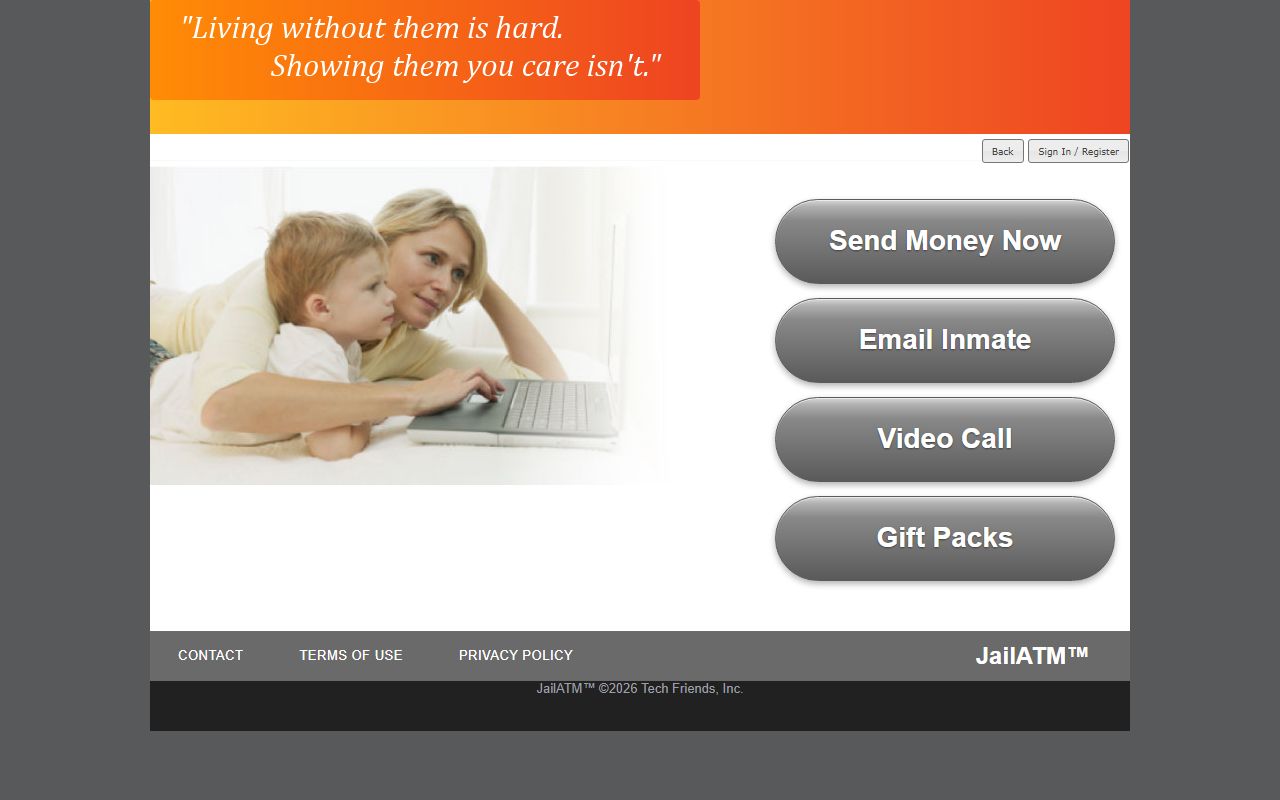
Using the kiosk or the online account, a family member can post a bond by card without carrying exact cash to the lobby. The same service handles deposits to an inmate's trust account and prepaid care packages.
Iosco County Jail Visitation Schedule
Visits at the county jail are limited and time-boxed. Each inmate gets one 30-minute on-site visit per week, and the person must be in custody for at least 72 hours before becoming eligible. On-site slots are available every day within a set window. Remote video visits run through CIDNET and are arranged and paid for by the family or friend.
| Day | Hours | Type |
|---|---|---|
| Monday | 9:00am - 7:00pm | On-site or CIDNET |
| Tuesday | 9:00am - 7:00pm | On-site or CIDNET |
| Wednesday | 9:00am - 7:00pm | On-site or CIDNET |
| Thursday | 9:00am - 7:00pm | On-site or CIDNET |
| Friday | 9:00am - 7:00pm | On-site or CIDNET |
| Saturday | 9:00am - 7:00pm | On-site or CIDNET |
| Sunday | 9:00am - 7:00pm | On-site or CIDNET |
Set up remote visits through the CIDNET visitation service ahead of time. The weekly 30-minute limit applies to the on-site visit, so plan the day and hour that works best for the household.
Inmate Mail and Phone Rules
Mail is a common way to stay in touch, but the jail screens all of it. Letters must come through the United States Postal Service, must carry a return name and address, and are searched for contraband before delivery through inmate kiosks. Polaroid photos, pornographic pictures, and drawings are not allowed. Address each envelope to the inmate by name at the jail.
The county publishes its full mail, phone, and visitation policy, which is worth reading before you send anything, on the inmate mail and phone page. The image below shows that county resource.
The correct mailing format is: Inmate Name, 428 W. Lake Street, Tawas City, MI 48763. Anything that does not follow the rules can be held or returned, so keep letters plain and include your own return address.
Phones are outgoing only and every call is recorded. The system is owned by Combined Public Communications and runs from 7:00am to midnight. Family members add talk time through inmatesales.com or by calling 1-877-998-5678. The jail line at (989) 362-6164 is for emergencies and status questions, not for reaching an inmate directly.
Note: Because all calls are outgoing and recorded, families cannot dial into the jail to reach an inmate, so funding a phone account is the way to keep the line open.
Commissary and Inmate Funds
Money taken at booking goes into an inmate trust fund, and family or friends may add to it. Those funds pay for commissary orders, which arrive on Thursday each week. No outside items are permitted, so the trust account is the only way to supply extras. Eyeglasses and prescription medicine may be dropped off, but all medicine must be in its original pill container and is subject to approval by medical staff or the jail administrator.
Inmates who cannot afford commissary are not left without basics. Indigent inmates receive a hygiene pack that costs $2.21. It includes toothpaste, a pencil, two stamped envelopes, four blank sheets of paper, deodorant, shampoo, and soap. Personal property brought in at arrest is documented and locked up until release.
The county spells out the property and commissary rules, including how funds are handled, on its personal items and commissary page. The image below shows that page.
Deposits to a trust account can be made through the same JailATM service used for bonds and care packages. Adding money is quick, and it lets an inmate order from the weekly commissary list.
Important: Bringing illegal drugs, a cell phone, or a weapon into the jail after the posted warning is read can trigger a separate five-year felony charge on top of the original offense.